The After Party

July 16th


Walt Disney Corp. is one of the greatest marketing companies on earth.  Pound for pound they don't hold a candle to Iceland.  The country only has 300,000 people.  Ninety percent of the land is natural desert.  The coast had trees 1,200 years ago.  All of them are gone now, cut down by the Vikings.  Iceland is cold and cloudy even in the summer.  There is little industry or financial wealth.  Despite the shortcomings Iceland has turned itself into a prime tourist destination.  Norway has beautiful terrain, great sporting venues, enormous wealth, and a healthy well educated population.  They think visiting Iceland is a gigantic treat.  Everybody else goes there too.  What a marketing success!


Iceland is tremendous fun.  Everybody is in a good mood.  You get off the plane and it's contagious.  "This place is cool."  The Golden Circle is the country's go-to excursion.  Gail and I enjoyed it on a small tour bus.  We left Saturday morning.  Two-thirds of Iceland's population lives in the Rykjavik area.  Within 30 minutes that was in the rear view mirror.  Out in no man's land.


Thingvellir was our first stop.  That's now a national park with hiking trails around one of Iceland's biggest lakes.  Twelve hundred years ago it served as the world's first parliament.  Leaders from the different villages met each year to resolve problems and plan for the future.  The meetings continued for 400 years until Norway took control in 1264.  In 1376 Norway itself was absorbed by Denmark.  Iceland was part of the package.  Iceland eventually became independent after World War One.  But it still shared the Danish king.  It finally shed all its shackles in 1944 when Germany conquered Denmark.  The Icelanders took that opportunity to say adios once and for all.


Geyser is Iceland's iconic landmark.  The entire island is full of geothermal energy.  Water spouts out of the ground across the land.  Geyser is the most famous.  Today Iceland's "old faithful" is a shadow of its former self.  Twenty years ago scientists tried to rejuvenate the eruptions with chemicals.  Those created environmental problems and were abandoned.  The area today contains a wide area of hot springs.  But the height of the bursts are less spectacular than in the old days.


The Gullfoss waterfall was next.  It truly is out in the middle of nowhere.  Gullfoss might never have been popularized were it not for a woman who single handedly built the trails to make the place accessible.  Gail and I enjoyed the crashing waterfalls.  We were particularly interested to see how dangerous it all was.  In America there would be stairs and railings and handicap lifts.  Here it was wet rocks, steep climbing, and uneven footing.  That didn't phase anybody.  Iceland is fun!  Old men scrambled up the slippery rocks.  Little kids jumped back down.  Ah, the good old days!


The Secret Lagoon was the end of the line.  The "Blue Lagoon" is another one of Iceland's marketing creations.  That was south of Reykjavik, too far for us to reach.  We stopped at a knock off instead.  It was great!  Hot springs filled the pool.  The beer prices were reasonable.  Everybody felt relaxed and had a blast.


We walked around Reyjavik some more after returning.  The dark in winter might be a challenge.  In July the night barely exists.  Gail heard heavy metal in the distance.  I thought it was some guy blasting his stereo.  She didn't buy that.  We walked toward the sound.  A block party had sprung up.  The joint was jumpin'.  At first we were in the back, where seeing the stage was difficult.  Gail solved that problem.  We skirted around the crowd to a better viewing area.  Before long the head bangers saw where we'd gone and joined us.  Party time!


Huffin' and Puffin

July 17th


Gail and I split up again Sunday morning.  She went on a harbor cruise.  I took another bike ride.  The main purpose of the boat trip was to see the puffins.  An estimated 10 million live in Iceland.  A large colony stays on an island in Rykjavik's harbor.  Puffins are cute.  Unless you're a fish.  Puffins can eat 12 fish at a time when they're hungry.  The Atlantic puffins were endangered 100 years ago and remain a protected species.  Hunting and habitat destruction nearly did them in.  These days the puffins are thriving.  Gail was able to see thousands as the boat sailed by the shore line.


Gail and I hiked around town in the afternoon.  We toured the parks and enjoyed the eclectic artwork.  Along the way we stopped at the National Museum.  Some of the artifacts went back 1,000 years.  Most of the exhibits were recreations though.  Iceland's soil is acidic.  Very little has survived intact.  Careful records document the country's past.  It was possible to recreate a lot of the history.  But most of Iceland's ancient treasures are lost.


The museum's modern section includes a section on Iceland's experience in World War Two.  The country still was affiliated with Denmark and insisted on remaining neutral.  The United Kingdom insisted otherwise after Germany invaded Norway, threatening its shipping lanes.  The U.K. invaded in late 1940.   Control was transferred to the United States in 1941.  Before Pearl Harbor.  Americans poured into Iceland.  An airport was built.  Construction began on roads, barracks, buildings, and whatever else was needed.  Jobs were created.  New skills were learned.  Modern technologies arrived.  Iceland quickly transformed into a fast growing industrial economy.


The combination of beautiful Icelandic women and American soldiers created "The Situation."  The local government concluded it wasn't a deal breaker.  The Americans were laying the groundwork for an explosive increase in living standards.  GDP growth outpaced the rest of the world for the next 60 years.  The American presence also facilitated Iceland's formal independence in 1944.  The Nazis could have tried to claim Iceland as part of its Denmark conquest.  That didn't happen with the Americans there.


The museum didn't talk about recent events.  Well, it did have the ball used by the Icelandic soccer team when it beat England in the recent European Championship.  But there was nothing about the 2008 financial crash or the Panama Papers.  You needed to take a bike ride to get those stories!

"No no no no no ...."

July 17th


The bike ride started from the old harbor.  The temperature was 15C.  Cloudy.  Little breeze.  I wore a sweatshirt.  Our guide was a native.  Agnar.  The first thing he said, "Want a jacket?"  I looked him over.  He had a shirt on.  And a sweatshirt.  And a sweater over that.  Plus a jacket.  "All right."  Neither one of us took anything off the entire time.  I should have worn more.  It was wicked cold on the other side of town.


The Fairie Rock was our first stop.  Agnar went on and on about fairies coming out of the rock and going back into the rock and what made them go in and what made them go out.  Everybody in the group listened politely and wondered what we'd gotten ourselves into.  Apparently there is a strong belief in fairies among the Icelanders.  It's an entertaining fantasy.  They go with it.  Maybe it helps explain why Iceland is so much fun.


Agnar was a fabulous leader.  After discussing fairies for 10-15 minutes he jumped on his bike without warning and took off.  We caught up with him at the university.  Before the crash in 2008 tuition wasn't free like it is in Norway.  But it was affordable.  Prices skyrocketed after the crash.  Now that tourism has gained momentum and national income is climbing again tuition rates are leveling off.  Still, it costs serious money to attend college in Iceland.  Health care used to be cheap too.  Now the best doctors and nurses leave Iceland because they can earn more overseas.  Pensions were restructured as well.  The people of Iceland took it all in stride, knuckled down, worked harder, worked smarter, and got back on track.

The financial crash was similar to Europe's.  Real estate development took off.  The banks financed it with loans denominated in dollars and euros.  The mortgages were in kroner.  Then the market collapsed.   The kroner's exchange rate made it impossible to pay back the loans even if no borrowers defaulted.  Of course the defaults did cascade, putting the banks in technical bankruptcy.  Anyone who has seen "It's a Wonderful Life" knows that banks can keep operating as long as the depositors don't ask for their money back.  In this case they did.  Most depositors were hedge funds, sovereign wealth funds, family offices, and other rich investors seeking high yields.

The government paid them back.  It bailed out the banks.  The banks paid the creditors.  The citizens paid higher taxes and received fewer services.  Agnar thought they should have let the banks go bust.  That argument didn't prevail in America and it didn't in Iceland either.


The Panama Papers recently were leaked.  Agnar discussed them as we rode by the official prime minister's residence.  In April 2016 Iceland's prime minister had been interviewed on "60 Minutes" about whether or not he had any offshore accounts.  "No no no no no no ....."  Your signature is right here.  You sure?  Sigmundur Gunnlaugsson ran from the cameras, resigned the next week, and hasn't been seen in Iceland again.  The Panama Papers are a trove of original documents created by an offshore law firm.  They describe how hedge funds, sovereign wealth funds, family offices, and government officials avoid taxes and steal money.  Gunnlaugsson is married to the wealthiest woman in Iceland.  One of her companies invested in Iceland's banks before the 2008 crash.  It was repaid in full.

What about the Clintons?  They are not involved with the Panama Papers.  (Not yet at least.)  But there is a connection to Iceland.  The former president visited Rykjavik after leaving office to attend a conference.  While the other honchos ate a catered dinner President Clinton snuck away to Baejarins Betzu Pylsur, a local hot dog stand.  Crowds swarmed around him as he ate what became known as the "Bill Clinton" -- a hot dog with mustard!  It's still on the menu.


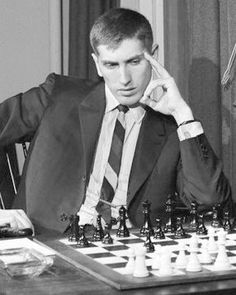
Bobby Fischer put Rykjavik on the map. In 1972 he defeated Russia's Boris Spasky for the world chess title.  Russians had owned the championship before that.  Years later the ungrateful American government wanted him extradited.  Fischer had "illegally" played chess in Yugoslavia during the civil war.  Iceland came to his defense.  They provided asylum.  Fischer died in 2010 and is buried 60 kilometers outside of Rykjavik in Selfoss.  Gail and I drove by the memorial during the Golden Circle trip.  Fischer died with millions in the bank.  His wife was Japanese; his mistress Filipino. The mistress had a daughter.  She sued the estate.  Fischer's body was exhumed.  The DNA test showed the daughter wasn't his.  Fischer's wife ultimately collected the money.  Except for the various fees that were paid to the Icelandic government.  The U.S. government also sued but came up empty.

The fish market was our final stop.  Fishing has been an economic mainstay for centuries.  It still represents 15% of Iceland's GDP.  The catch is high quality.  According to Agnar Iceland generates 12% of the world's wholesale revenue from fishing even though by weight it's only 1%.  In the 1970s Iceland's Coast Guard battled it out with British trawlers that tried to operate inside the new 200 mile limit.  It cut their nets.  Today those waters are exclusive to Icelandic fishermen.  The British also lost out to Norway around that time.  Norway insisted on a generous interpretation of the 200 mile limit.  Britain acceded.  A few years later Norway discovered oil reserves in the disputed area worth billions.


Ha det bra !

Gail and I had a late flight back to America.  We had time to stroll around Rykjavik some more.  We walked through the Harpa, the city's new concert hall.  The main auditorium was closed.  The exterior featured a space age design.  A massive construction project was underway across the street.  A five star hotel.  Another project was going up next door.  A gigantic retail-office-condominium complex.  The big money definitely is looking favorably upon Iceland again.


The marketing campaign continued right to the finish.  The airport exuded energy.  How can you complain about standing in line when there are 25 beautiful blue eyed blond ticket agents working the counter right across the way?  The place was unbelievably busy.  Iceland discounts air fares to bring in the business.  There are two million people in Greater Boston versus 200,000 in the Rykjavik area.  The Rykjavik airport felt busier.  Even the food court area was hopping.


Iceland was great.  But it doesn't hold a candle to Norway.  That would be true even if we hadn't met my long lost family.  I was the long lost one, actually.  It was a once in a lifetime experience.


Thanks to Laila and PG !


Thanks to Else Gerd and Gunnar !


Thanks to everybody !